
REVIEW · WEST COAST CATAMARAN CRUISES
Hands on Sailing Tour in Rodney Bay St Lucia
Forty feet of sail training in one afternoon. This hands-on St Lucia experience turns Rodney Bay into a real classroom on the 40-foot Papagayo racing yacht, with coaching that makes sailing terms practical instead of confusing. I love the chance to get hands-on sailing practice, and I love the stunning payoff of cruising past Pigeon Island while you learn.
One thing to consider first: there is no hotel pickup, so you need to make your own way to Rodney Bay Marina. Also, the activity calls for a strong physical fitness level, so it is not a sit-fully-still kind of tour if you want to participate.
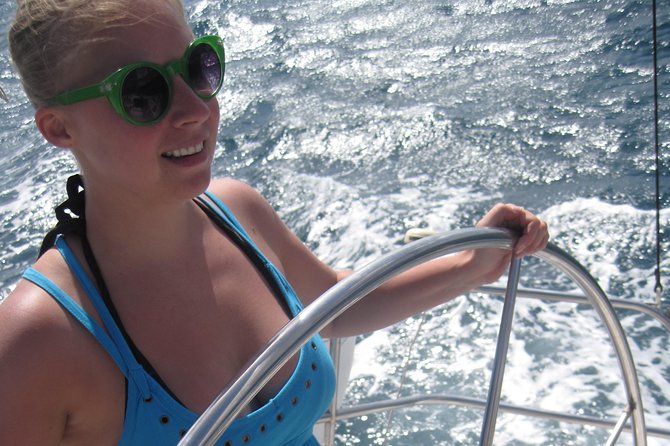
If you want it flexible, you’re set. You can take the helm, practice sail tasks like hoisting and trimming, or you can simply watch the action from the boat. I also liked that the instruction style is friendly and clear, with Vicky specifically called out as an effective guide for breaking down what you’re doing before you do it.
In This Review
- Key things you’ll notice on this Rodney Bay yacht lesson
- Why Rodney Bay is a great place to learn sailing basics
- Getting aboard the Papagayo at Rodney Bay Marina
- Safety first: what the briefing is really for
- Learning the main sail and trimming: where control starts
- Flying the jib: turning sailing words into actions
- Hoist, trim, steer: taking the helm if you want to
- The scenery run: Rodney Bay, Pigeon Island, and the coastline feel
- How much physical effort should you expect?
- Value for money: why $150 feels fair for what you get
- Logistics that can make or break the day
- Who should book this sailing lesson in St Lucia?
- Should you book this hands-on Rodney Bay sailing tour?
- FAQ
- How long is the Hands on Sailing Tour in Rodney Bay?
- Where do I meet for the tour?
- What is the meeting point schedule like?
- How much does the tour cost?
- What’s included in the tour price?
- Is hotel pickup and drop-off included?
- What is the minimum age?
- How many people are in a group?
- What should I bring or prepare for?
Key things you’ll notice on this Rodney Bay yacht lesson
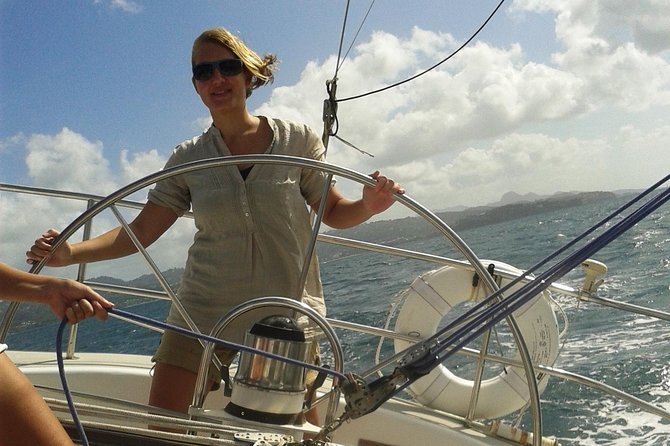
- A 40-foot racing yacht, the Papagayo, not a tiny starter boat
- Real skills you can practice, including hoisting the main and flying the jib
- Small group size (max 8), so you’re not lost in the shuffle
- Rodney Bay and Pigeon Island scenery, good even if you mostly watch
- Morning or afternoon departures, so you can match it to your day
- Water and soft drinks included, easy win for a 3-hour sail
Why Rodney Bay is a great place to learn sailing basics
Rodney Bay is the kind of water where learning makes sense. You get a true open-sea feel without turning your afternoon into a white-knuckle event. The coastline scenery helps too, because you’re not just stuck staring at ropes and instructions. As you move around the bay, you get changing views of St Lucia’s rugged shoreline and turquoise water.
This is a smart choice if you’re the sort of traveler who gets bored by passive sightseeing. The point here is not to watch other people work. The point is to understand what the sails do and what your hands do to make that happen.
You also get the practical benefit of learning on a boat designed to sail well. The Papagayo is a 40-foot racing yacht, so you’ll feel how a real sailing setup works. It’s spacious enough for comfort, but still built for speed, which makes the lesson feel authentic.
Getting aboard the Papagayo at Rodney Bay Marina
Your tour starts at Rodney Bay Marina, and it ends back there. No hotel pickup is included, so plan to arrive on your own schedule and give yourself a little buffer time.
When you first step onto the boat, you’ll get a safety and sailing run-down from the professional crew. This matters more than people think. Sailing has a lot of small moving parts, and knowing how the boat is managed keeps everything calmer when you’re learning something new. The crew also introduces the equipment you’ll use, so you’re not just being told to pull ropes without context.
Because the tour is capped at a maximum of 8 travelers, it tends to feel like a guided session instead of mass tourism. You’re more likely to hear instructions clearly, and you’re more likely to get a chance to try.
More around Rodney Bay and Gros Islet village


Safety first: what the briefing is really for
This isn’t just a formality. Before you start hoisting or trimming, the crew will explain the safety procedures and the basics of how to move and handle the sailing equipment. You’ll also get introduced to the boat’s key features and how they’re used during sailing.
Why I like this setup for learners: you’re not trying to master sailing plus “figure out how to not get in the way.” The briefing gives you a map. Then when you step into hands-on practice, it makes sense.
Also, the tour is run with a capable professional crew throughout, which is reassuring if you’re new. You’ll still be active if you want to be, but you’re doing it with guidance rather than guesswork.
Learning the main sail and trimming: where control starts
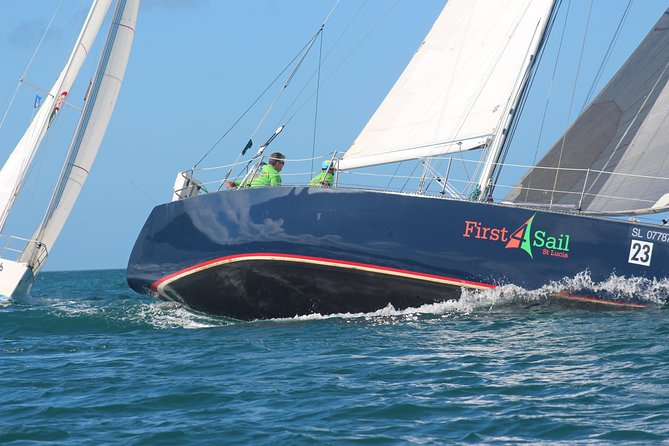
One of the best parts of this tour is that you’re not stuck with vague directions. You’re taught the practical actions that change how the boat moves.
The crew walks you through core tasks such as:
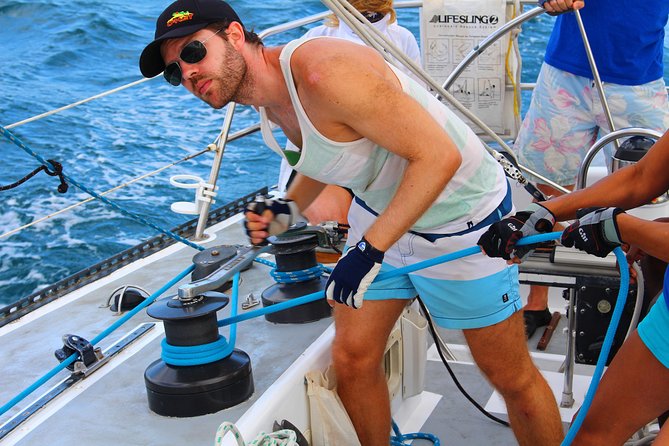
- Hoisting the main sail
- Trimming the sails
- Winching
Hoisting is a great first skill because it teaches you what it means for sails to come alive. Trimming is where you start to feel control, since small changes in sail position can make the boat behave differently.
Even if you consider yourself a total beginner, you can usually participate in some way. The goal is basic sailing skills, not advanced racing technique. And because you’re on a calmer bay environment, you have room to learn without panic.
Flying the jib: turning sailing words into actions
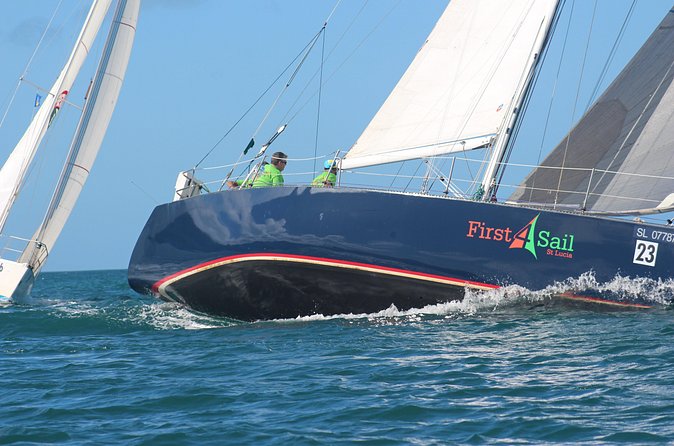
If you’ve ever heard the phrase flying the jib and wondered what it actually means, this is where it becomes real. You’ll learn what the term refers to, then practice it yourself under the crew’s watchful eyes.
The jib is a sail that changes the way the yacht catches wind, and learning it helps you understand sailing as more than just “pull on something and go.” You’ll start to connect wind, sail shape, and direction.
This is also where the small group size pays off. It’s easier for the crew to correct your movements and help you repeat the task until it feels right. You get fewer people between you and instruction.
Hoist, trim, steer: taking the helm if you want to
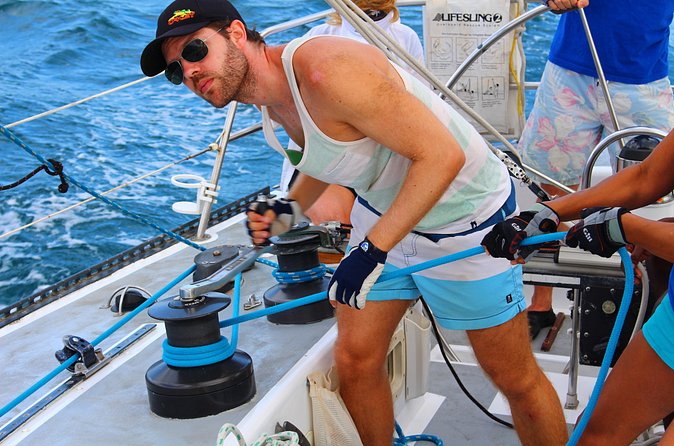
You can participate as much or as little as you like. That flexibility is not just “nice wording.” It’s a real factor in whether this tour feels fun or stressful.
If you want to try the helm, you can. If you’d rather focus on watching and learning, you can do that too. Either way, you’ll be out on the water doing something with purpose.
I like that the tour supports different comfort levels. Some people love hands-on work. Others are happy to stand by and soak it in. You don’t have to “perform” sailing all afternoon to get value.
Other catamaran days down the leeward coast
The scenery run: Rodney Bay, Pigeon Island, and the coastline feel
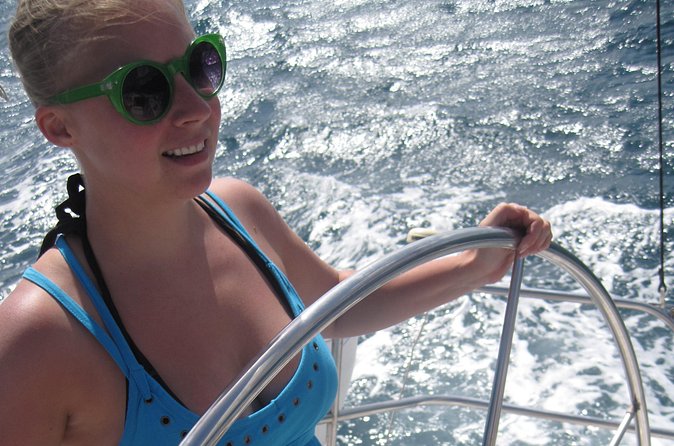
The coastline views are part of the package, and they don’t require any skill level. As you sail across Rodney Bay and past Pigeon Island, you get that classic St Lucia contrast of mountainous shorelines with open water and bright sky.
Pigeon Island is especially rewarding because it gives you a landmark while you’re learning. Your brain gets a break from technical tasks, and you can look outward to see where you are and what you’re heading toward.
Even if you’re mostly watching, the water time feels like more than a photo stop. The boat moves, the horizon shifts, and the light changes as you move around the bay.
How much physical effort should you expect?
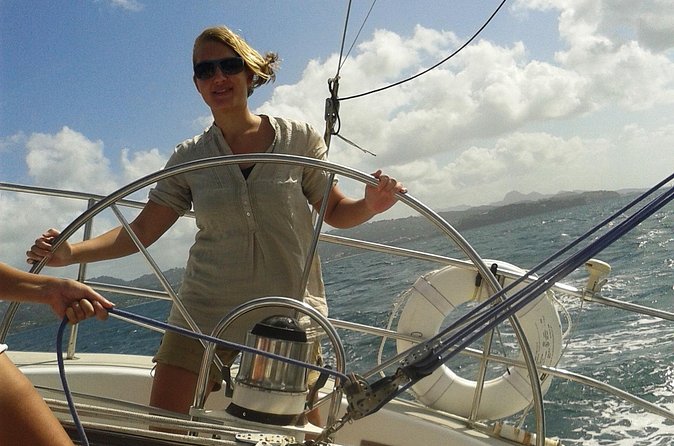
The tour lists a strong physical fitness level requirement. That does not mean you need to be a marathon runner, but it does mean you should be ready to stand, move around the deck, and possibly help with tasks like winching or handling sail lines.
If you’re planning to take part actively, come prepared. Wear footwear you can trust on a deck surface. And if you’re prone to getting seasick, keep an eye on how you feel once you’re underway. The tour’s water is generally calm enough for learning, but you’re still on the open sea.
You’ll also want sun protection. Bring it. The tour recommends it, and you’ll feel it on deck even in warm months.
Value for money: why $150 feels fair for what you get
At $150 per person for about 3 hours, this is not a budget “just hop on a boat” activity. What makes it worth it is what you get during that time.
You’re paying for:
- A 40-foot sailing yacht (the Papagayo)
- Professional crew and safety support
- Instruction and hands-on practice on real sailing tasks
- Water and soft drinks included
- A small group experience (up to 8 travelers)
For many travelers, the biggest value is the skill component. A sightseeing boat ride gives you views, but it rarely teaches you anything you can use. Here, you leave with sailing basics you actually understand, including the meaning of terms like flying the jib.
If your goal is just scenery, you’ll still enjoy the coastal views. If your goal is to feel the wind and do something physical and memorable, this price starts to make a lot more sense.
Logistics that can make or break the day
There are two practical things to plan around.
First, no hotel pickup means you need to get yourself to Rodney Bay Marina. If your hotel is far, build in extra time. The tour is near public transportation, so that can help, but don’t count on last-minute fixes.
Second, the tour ends where it starts. That’s convenient, but it also means your day plan should allow you to return to the marina area afterward without rushing.
Also note the tour uses a mobile ticket. Keep your phone charged and easy to access when you arrive.
If you’ve got flexible plans, cancellations are free up to 24 hours before the start time for a full refund, which is reassuring if weather or schedules change.
Who should book this sailing lesson in St Lucia?
This tour is a great fit for people who want active learning on vacation. It’s especially good if you:
- Want to learn basic sailing and actually practice
- Like small group experiences
- Are comfortable being on a boat and moving around a bit
- Enjoy coastal scenery and want it paired with an activity
It may be less ideal if you’re looking for a fully relaxing luxury cruise where you do nothing but sit. The tour is flexible, yes, but it is designed for participation and practice. And because strong physical fitness is required, it’s not the best choice if you’re expecting a purely sedentary outing.
Minimum age is 12, so it can work for older teens, especially those who like hands-on experiences more than museum-style learning.
Should you book this hands-on Rodney Bay sailing tour?
Yes, you should book it if you want a skill-based experience that still feels like a great day out on the water. The combination of a 40-foot Papagayo yacht, real sailing tasks you can practice, and the small group size makes it feel personal and manageable.
I’d especially recommend it if sailing language is currently just jargon to you. Flying the jib and trimming the sails become understandable because you get coached, then you try.
Skip it if you want zero physical effort, or if you absolutely need hotel pickup and door-to-door service. Also, make sure your day includes time to reach Rodney Bay Marina and back without stress.
If you’re on the fence, the deciding factor is simple: do you want to do more than watch? If the answer is yes, this is a solid way to spend a half-day in St Lucia, with the kind of learning that sticks.
FAQ
How long is the Hands on Sailing Tour in Rodney Bay?
It lasts about 3 hours.
Where do I meet for the tour?
You meet at Rodney Bay Marina, St Lucia.
What is the meeting point schedule like?
The activity starts at Rodney Bay Marina and ends back at the meeting point.
How much does the tour cost?
The price is $150.00 per person.
What’s included in the tour price?
You get a professional crew, water and soft drinks, and safety and sailing instruction.
Is hotel pickup and drop-off included?
No, hotel pickup and drop-off are not included.
What is the minimum age?
The minimum age is 12 years.
How many people are in a group?
The tour has a maximum of 8 travelers.
What should I bring or prepare for?
Bring your own sun protection, and make sure you have a strong physical fitness level since the activity expects physical involvement.
More St Lucia Tours We Have Reviewed
- ATV Tour in St Lucia★ 5.0 · 1,021 reviews
- St Lucia Full-Day Catamaran Sightseeing Cruise With Snorkeling★ 4.5 · 592 reviews
- Rainforest Hike and Waterfall Safari★ 5.0 · 567 reviews
- Wow Tours St. Lucia (COVID-19 Certified)★ 5.0 · 514 reviews
Catamaran Days Down the Leeward Coast
- St Lucia Full-Day Catamaran Sightseeing Cruise With Snorkeling★ 4.5 · 592 reviews
- Champagne Sunset Sail in St. Lucia★ 4.5 · 146 reviews
- Private Luxury Catamaran Cruise in St. Lucia★ 5.0 · 113 reviews
- Private Full Day Luxury Catamaran Excursion★ 5.0 · 39 reviews
Rodney Bay and Gros Islet, More of It
- Rodney Bay Food Tour by LUCIAN FOOD TOURS★ 5.0 · 76 reviews
- Roundtrip Transfer from UVF Airport to Resorts in Gros Islet (Groups of 4 Plus)★ 5.0 · 69 reviews
- St Lucia Shore Excursion: Rodney Bay Village Segway Adventure★ 4.5 · 37 reviews
- Private Northern Boat Tour- Castries To Rodney Bay or Rodney Bay to Marigot Bay★ 4.5 · 15 reviews
Just Reviewed on the Island




West Coast Catamaran Cruises, side by side.
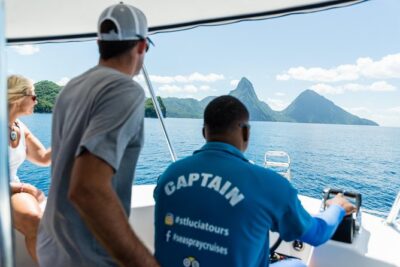 ★ 4.5St Lucia Full-Day Catamaran Sightseeing Cruise With SnorkelingFrom $145592 reviews
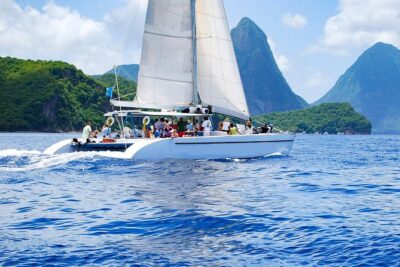 ★ 4.5St Lucia Catamaran Day Sailing and Sightseeing TourFrom $138198 reviews
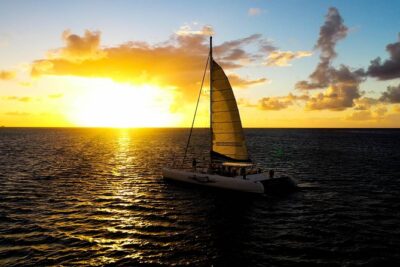 ★ 4.5Champagne Sunset Sail in St. LuciaFrom $75146 reviews
 ★ 4.6From Castries: Full-Day Catamaran Tour to SoufriereFrom $145114 reviews
 ★ 5.0Private Luxury Catamaran Cruise in St. LuciaFrom $2,000113 reviews
 ★ 5.0Private Full Day Luxury Catamaran ExcursionFrom $2,20039 reviews
 ★ 5.0Private Half-Day Luxury Catamaran ExperienceFrom $1,68018 reviews
 ★ 4.5Private Half Day Catamaran CharterFrom $1,23815 reviews
Where else this one turns up