

REVIEW · CASTRIES SHORE EXCURSIONS
Castries City Walking Tours
Castries tells stories at walking speed. This tour is interesting because it mixes street-level history, Nobel connections, and a stop at the Castries Food Market where you can taste local fruits, vegetables, and spices. I especially liked the guide-led context that ties colonial influence to what you see now, and I liked the very practical pacing with bottled water. The main drawback is simple: after repeated fires, you may not find the big, visible ruins you hoped for, so you are buying explanations, not castles.
It runs about 1 hour 30 minutes to 2 hours, and you can get pickup. Best of all, it is a private experience for your group, so you are not stuck listening to someone else’s wandering questions the whole time.
In This Review
- Quick hits before you go
- Entering Castries City on foot, with the market as your anchor
- Price and value: $35 that makes sense if you want guidance
- Where you meet and how to make the start easy
- Castries Market: tastes, smells, and the quickest way to learn the city
- Derek Walcott Square: Nobel pride, street names, and why a bust matters
- Jean Baptiste Bideau, monument to memory, then a breath at Bideau Park
- Holy Trinity Anglican Church and the colonial-era thread you’ll notice while walking
- Bottled water, walking comfort, and why timing matters
- Guide quality matters, and the names you might hear
- Small-group pacing: private, but still social when you want it
- Who should book Castries City Walking Tours, and who should skip
- Should you book this tour?
- FAQ
- How much does the Castries City Walking Tour cost?
- How long is the tour?
- Is pickup available?
- Is this tour private?
- Where does the tour start?
- What is included in the tour price?
- Is private transportation included?
- Are there mobile tickets?
- Do I need good weather for the tour?
- Are service animals allowed?
Quick hits before you go

- Castries Market first: Start with the Food Market, where tastes and smells help the history stick.
- Nobel Prize street pride: Derek Walcott Square is tied to Nobel winners and local identity.
- Short stops, steady flow: Monument of Jean Baptiste Bideau and Bideau Park are brief but meaningful.
- Water is included: You get bottled water, or fresh coconut water, for the walk.
- Your group only: It is labeled private, restricted to your own group.
Entering Castries City on foot, with the market as your anchor
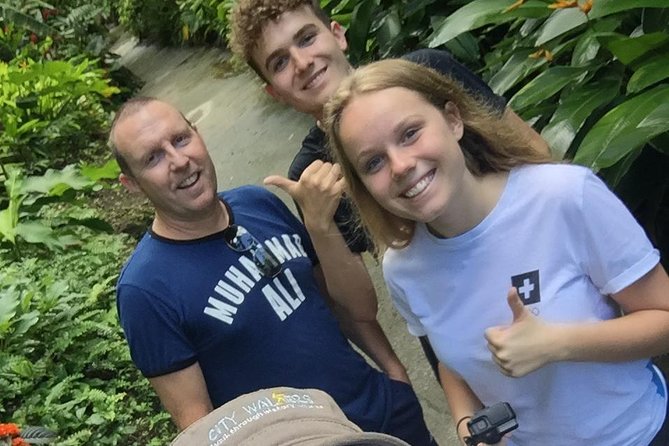
Castries can feel like a working port town more than a postcard museum. That is exactly why this tour works. You are not trying to “visit history” like it’s a single building. You are walking through the city’s everyday spaces, then using the stops to connect the past to the present.
The route is built around readable, human-scale landmarks. You start at Castries Market, shift to Derek Walcott Square, then make quick stops at the Jean Baptiste Bideau monument and Bideau Park. The last segment brings you back to the market area, giving you a chance to browse or pick up snacks without feeling rushed.
That market-first approach is also practical. If the humidity hits, you’re already inside the most sheltered stop early on. And if you get hungry, the tour plan gives you a built-in moment to reset.
Price and value: $35 that makes sense if you want guidance
At $35 per person for roughly 1.5 to 2 hours, you should think of this as paying for two things: interpretation and convenience. The price is not just for someone walking beside you. It includes admission tickets for parts of the route, plus bottled water.
Here is the value equation I’d use before booking:
- You get guided context for street names, squares, and local landmarks.
- You get included water (bottled water or fresh coconut water).
- You get at least one paid entry portion tied to key stops.
If you love self-guided wandering and already know what you want to learn, you could feel this is just “basic info with a guide.” One review complained that the material is easy to find online, and they also pointed out that there is not much visible historic fabric left after fires. That is a fair consideration.
But if you want the story served in real time, with someone pointing out what to notice and how the city’s name and layout connect to the colonial era and later identity, the cost often feels fair.
Other ways to spend a ship day out of Castries
Where you meet and how to make the start easy
The meeting point is 55 John Compton Hwy in Castries, and the tour ends back there. Pickup is offered, which matters if you want to avoid wrangling transport right when you arrive.
Private transportation is not included, so you will want to plan your own way to the meeting point. The tour is near public transportation, which helps if you prefer to keep costs down and move like a local.
One tip: aim to arrive a few minutes early. With walking tours, the first minutes set the tone, and you’ll be ready to start on time without stress.
Castries Market: tastes, smells, and the quickest way to learn the city

Your first major stop is Castries Market, focused on the Food Market. The tour description leans on a strong claim, that it was once rated by National Geographic as one of the top 10 food markets in the world. You do not need to fact-check that on the spot. The practical value is that a market is where Castries becomes real fast.
What I like about this stop:
- You get to interact with local produce and spices. You are not just looking at it, you’re learning what it is and why it matters.
- It’s a sensory way to learn names. When someone ties street-level details to ingredients you can smell, the information sticks.
You also have downtime built into the plan. The schedule includes a second market block later, so you are not forced to decide everything the first time. That is helpful if you want to try a few items, then return for shopping with a clearer sense of what you liked.
Possible drawback: a market stop can be chaotic if you hate crowds. The good news is the tour timing is designed for a short, focused visit, not a long shopping marathon.
Derek Walcott Square: Nobel pride, street names, and why a bust matters
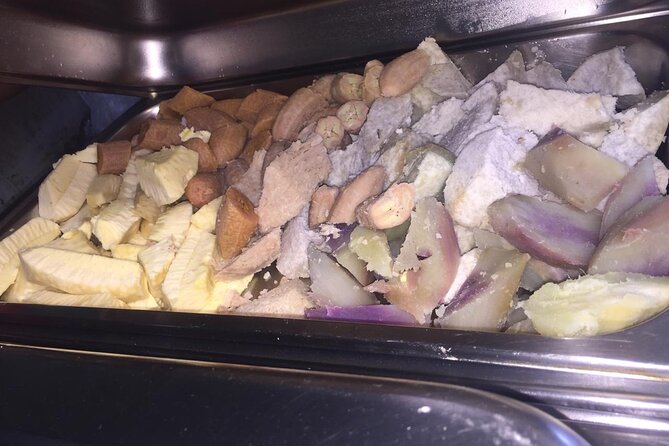
Next up is Derek Walcott Square. This is one of those stops where a small public space holds big meaning. The tour frames it as the man behind the bust, which is exactly the point. You’re not reading a plaque in a museum. You’re looking at the landmark that anchors local identity.
The square is also presented through the Nobel Prize lens, with the tour noting that two Nobel Prize winners from St Lucia are connected to this area, with the claim of the highest per capita for Nobel winners from one small island city. Even if you only remember the general idea, it helps you understand why these public markers matter in a place like Castries.
What you’ll get here is street-level history and explanation: how culture, education, and literature shaped local pride, and how public art like a bust or names on streets become a kind of memory system.
If you are expecting a formal museum exhibit, you may be disappointed. But if you enjoy walking past meaning and having someone point out what to look for, this is a great moment.
Jean Baptiste Bideau, monument to memory, then a breath at Bideau Park

After the square, the itinerary moves to the Monument of Jean Baptiste Bideau and then Bideau Park. Each is short on paper, but that can be a plus. You’re given a tight sequence, not a long stop that turns into standing around.
This is the part of the route where I’d think of it as “context compression.” A brief monument, then a park space. Together they offer a quick shift from public recognition to a more human pace.
The tour’s framing suggests these places support a broader understanding of local history. Even if the visible remnants of earlier eras are limited, the explanation helps you connect the dots between:
- names of figures in public spaces
- how parks and boulevards act as social glue
- how St Lucia’s past shows up in the city you walk every day
More of the island taken at a stroll
Holy Trinity Anglican Church and the colonial-era thread you’ll notice while walking
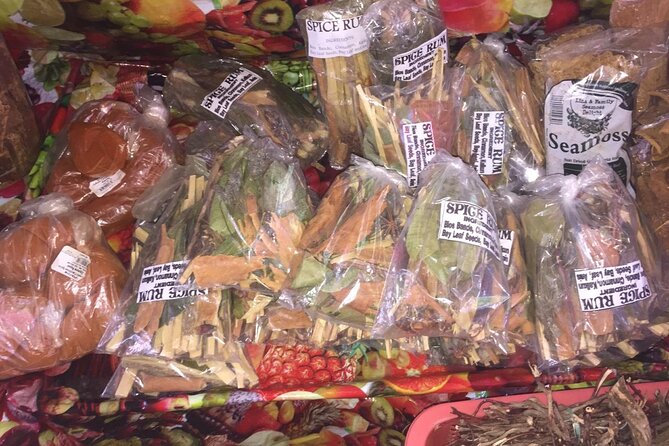
The tour overview calls out religious influence, including Holy Trinity Anglican Church. Even when a stop is not spelled out like the market or the square, you can still expect the guide to point out how colonial-era power and community patterns shaped what people built and how the town arranged itself.
This is where a good guide changes the whole experience. The best tours do not just list facts. They train your eyes for what is already around you.
I also noticed a theme in strong feedback: guides who were friendly and patient tended to deliver not only dates, but also “why it matters” moments. That matters here, because the church connection is one more angle on how European influence shows up in everyday Castries.
Bottled water, walking comfort, and why timing matters
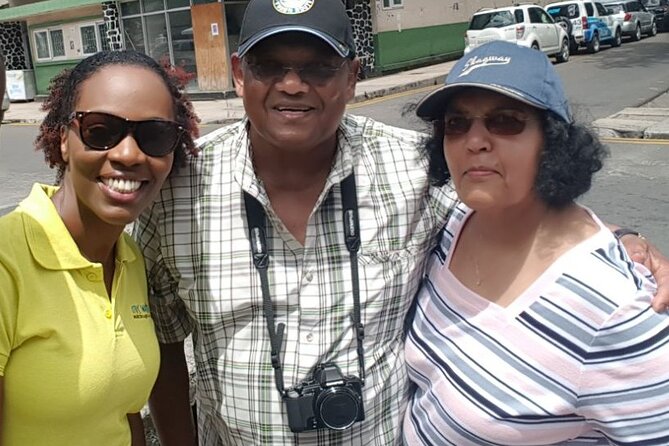
The tour includes bottled water, and the details mention bottled water or fresh coconut water. After a while in St Lucia heat, that small inclusion becomes a big deal. You’re less likely to cut the walk short for thirst, and you can stay focused on the story rather than thinking about where to buy water next.
The timing is also reasonable: 1 hour 30 minutes to 2 hours. You can fit this on a day when you also want to do beaches, shopping, or a food plan of your own.
Also, it helps that the tour is labeled as most travelers can participate. That suggests a typical walking pace rather than a strenuous hike.
Guide quality matters, and the names you might hear
One of the most interesting things from the feedback is how much guide personality shows up in the results.
Georges is praised for being patient and knowledgeable, and for making history feel clear while also covering the food side. Ricardo gets credit for interesting and fun facts, especially through pictures and murals around the city, plus a good pass through parks among greenery and flowers. Shelly earns multiple strong mentions for being a fountain of knowledge, attentive to needs, and even for encouraging debate points of view, plus a focus on authentic food stops and medicinal properties of some foods.
So what does that mean for you? It means this is a tour where the guide can make or break your day. If you enjoy asking questions, this kind of guide-led walk can turn into real dialogue. If you only want a “read it and move on” style, you might still be okay, but you’ll want a guide who keeps it tight and on-theme.
There’s also a reality check. A couple of experiences were less satisfying, tied to the fact that Castries has limited visible historic fabric after fires. If your expectation is heavy on physical ruins and museums, you may feel underwhelmed even with a great guide. This is about interpretation of what’s there now.
Small-group pacing: private, but still social when you want it
Because it is described as private, restricted to your own group, it’s easier to ask for clarifications without feeling like you’re slowing down strangers. It also means you can set your comfort level. If you want to linger by a market stall for an extra minute, it is easier to negotiate.
At the same time, private does not mean silent. This kind of walking tour often turns into a friendly exchange, especially if your guide is the type who enjoys conversation. The best part is that you can steer the questions toward what you care about most, colonial past, food, or local landmarks.
Who should book Castries City Walking Tours, and who should skip
This is a strong pick if:
- you want a short, guided orientation to Castries
- you enjoy markets and food culture
- you like history explained through streets, squares, and names
- you want a private experience rather than a large group
This might not be the best pick if:
- you expect lots of surviving castles, forts, or museum galleries
- you already know the entire story and just want independent wandering
- you dislike market crowds and short stops around busy areas
If you’re the kind of traveler who reads plaques and loves asking, you’ll likely get more out of the guide’s storytelling than the average person.
Should you book this tour?
I’d book it if you want a guided walk that ties together Castries Market, Nobel connections at Derek Walcott Square, and local landmarks like the Bideau monument and park. The price is reasonable for a 1.5 to 2 hour guided plan with admission portions and bottled water included, and the private-group format is a real quality-of-life boost.
I would not book it if your main goal is seeing a lot of preserved historic buildings. After fires, the visible past may be limited. In that case, you might prefer a different style of activity where the history is concentrated in larger, surviving sites.
FAQ
How much does the Castries City Walking Tour cost?
It costs $35.00 per person.
How long is the tour?
The duration is about 1 hour 30 minutes to 2 hours.
Is pickup available?
Yes, pickup is offered.
Is this tour private?
Yes. It is a private experience restricted to your own group.
Where does the tour start?
The meeting point is 55 John Compton Hwy, Castries, St Lucia.
What is included in the tour price?
The tour includes bottled water (bottled water or fresh coconut water) and admission tickets for specific stops.
Is private transportation included?
No. Private transportation is not included.
Are there mobile tickets?
Yes. Mobile ticket is listed as a feature.
Do I need good weather for the tour?
Yes. The experience requires good weather. If it is canceled due to poor weather, you will be offered a different date or a full refund.
Are service animals allowed?
Yes, service animals are allowed.
Other St Lucia Outings to Compare
- ATV Tour in St Lucia★ 5.0 · 1,021 reviews
- Wow Tours St. Lucia (COVID-19 Certified)★ 5.0 · 514 reviews
- Project Chocolat Tree to Bar Tour at Hotel Chocolat Saint Lucia★ 4.5 · 501 reviews
- Private Full Day Charter: St Lucia Boat Tour to Soufriere★ 5.0 · 468 reviews
More St Lucia Tours We Have Reviewed
- ATV Tour in St Lucia★ 5.0 · 1,021 reviews
- St Lucia Full-Day Catamaran Sightseeing Cruise With Snorkeling★ 4.5 · 592 reviews
- Rainforest Hike and Waterfall Safari★ 5.0 · 567 reviews
- Wow Tours St. Lucia (COVID-19 Certified)★ 5.0 · 514 reviews
Ship Days Out of Castries
- Cruise Ship Excursions with Dannyboy & Co.★ 4.5 · 89 reviews
- St Lucia Cruise Ship Excursion★ 5.0 · 47 reviews
- St Lucia Shore Excursion: Rodney Bay Village Segway Adventure★ 4.5 · 37 reviews
- Private Northern Boat Tour- Castries To Rodney Bay or Rodney Bay to Marigot Bay★ 4.5 · 15 reviews
Just Reviewed on the Island




Castries Shore Excursions, side by side.
 ★ 4.5St Lucia Castries to Pitons TourFrom $85136 reviews
 ★ 4.6From Castries: Full-Day Catamaran Tour to SoufriereFrom $145114 reviews
 ★ 4.5Cruise Ship Excursions with Dannyboy & Co.From $17089 reviews
 ★ 4.8From Castries: St.Lucia Island Guided TourFrom $18084 reviews
 ★ 4.1Babonneau/Castries: Rainforest Zip Line, Tram, and Hike TourFrom $11577 reviews
 ★ 4.5Cruise Sunset Party in CastriesFrom $8976 reviews
 ★ 4.0Piton Sunset Snorkel Cruise St. Lucia From CastriesFrom $11053 reviews
 ★ 5.0St Lucia Cruise Ship ExcursionFrom $9147 reviews
Where else this one turns up